

Advanced HFO Ventilation for the Smallest Patients
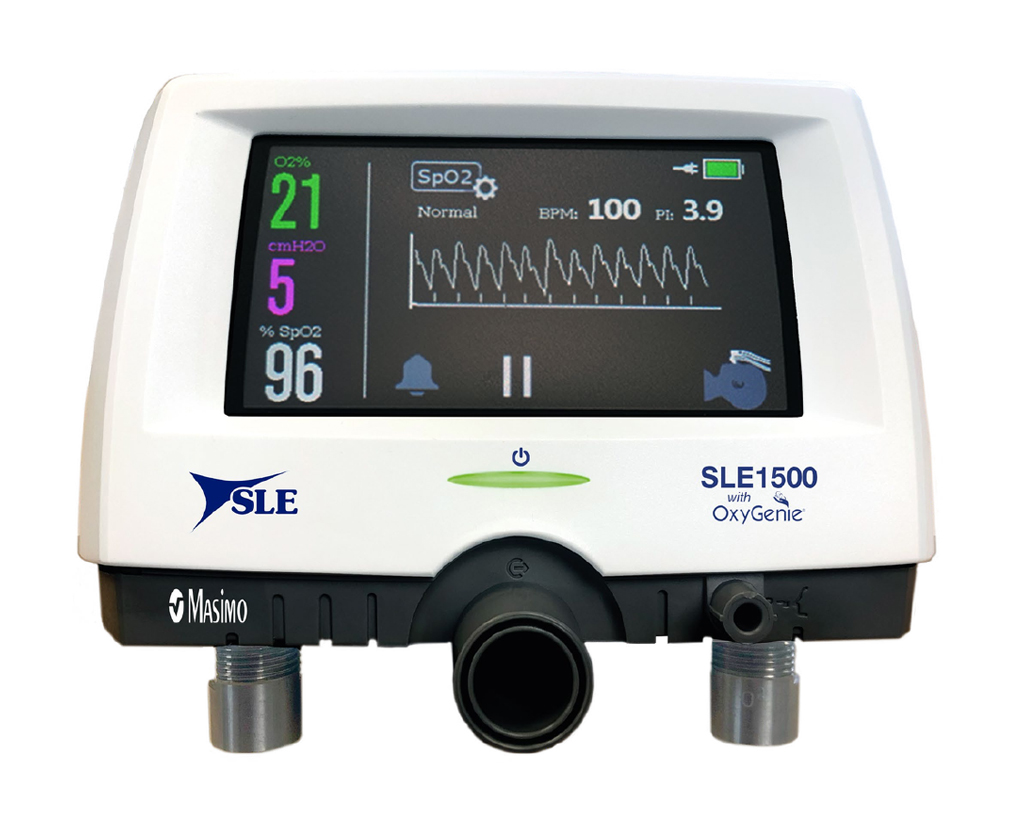
SLE1500 with OxyGenie®
As neonatal care continues to evolve across the Caribbean, one area receiving growing attention is oxygen stability and precise FiO₂ control, especially in fragile neonates where both hypoxaemia and hyperoxaemia may contribute to poorer outcomes.
Why this matters clinically
Can real-time oxygen control change clinical outcomes?
In neonatal care, SpO₂ can fluctuate constantly, while manual FiO₂ adjustment is intermittent and often delayed. The result may be repeated episodes of hypoxaemia, hyperoxaemia and overall oxygen instability.
OxyGenie® addresses this challenge through closed-loop automatic FiO₂ control, based on:
- Continuous SpO₂ monitoring
- Automatic FiO₂ adjustment
- A PID-based algorithm
- Real-time response, approximately every second
In simple terms, the system adjusts FiO₂ continuously and faster than manual bedside response alone.
What published evidence has shown
Clinical evidence supporting closed-loop oxygen control has shown meaningful improvements compared with manual FiO₂ adjustment, including:
- 87.5% vs 59.3% time within target oxygen range **
- Less time in hypoxaemia
- Less time in hyperoxaemia
- Greater oxygenation stability
In a recent randomised controlled trial in preterm ventilated infants, automated oxygen control was also associated with:
- 11 vs 40 days of mechanical ventilation **
- 33 vs 47 days of supplemental oxygen **
- 55% vs 83.9% bronchopulmonary dysplasia at 36 weeks **
- Lower need for home oxygen
These findings reinforce the clinical importance of maintaining more stable oxygen delivery in vulnerable neonatal patients.
Why this is relevant to the SLE1500
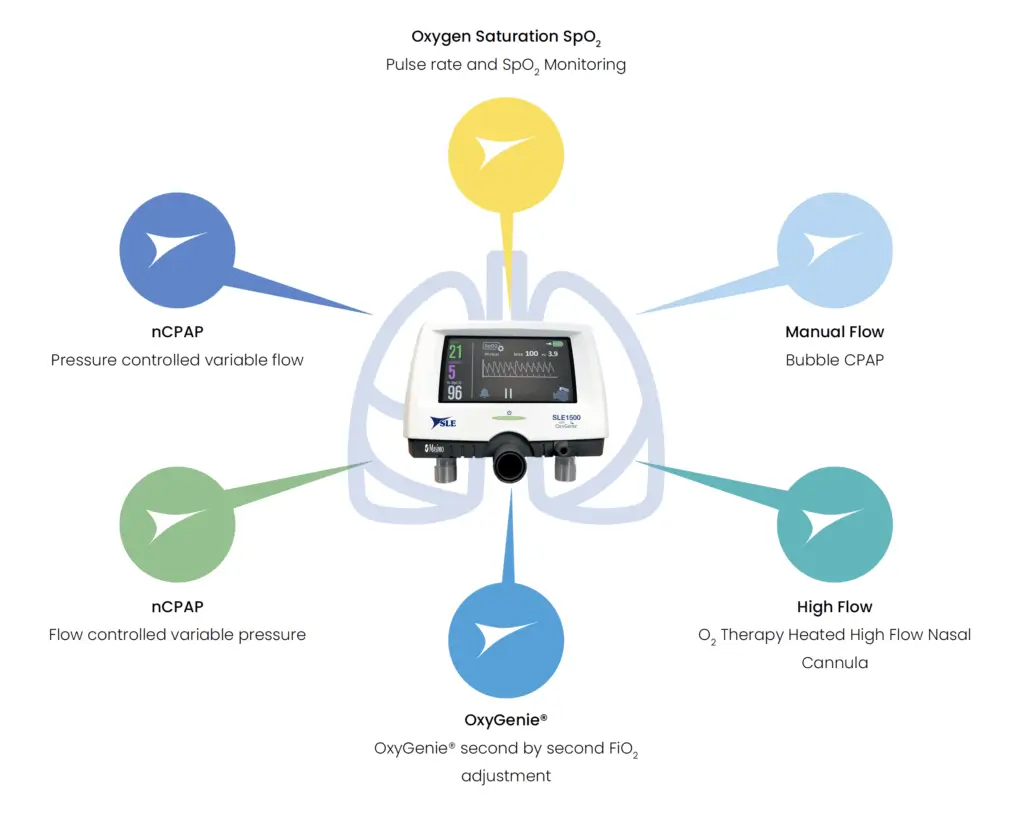
The SLE1500 combines neonatal non-invasive respiratory support with OxyGenie® automatic FiO₂ control, making it highly relevant for units looking to strengthen respiratory care pathways while improving oxygen targeting consistency.
The platform offers:
- nCPAP
- Bubble CPAP
- High Flow Oxygen Therapy
- Integrated automatic FiO₂ control with OxyGenie®
This makes the SLE1500 a valuable option for NICUs seeking a modern non-invasive solution that supports both clinical performance and workflow efficiency.
SLE1500 Ventilator - Documentation & Videos
Videos from the manufacturer:
SLE1500 Presentation Video
English Documentation
SLE1500 Brochure
SLE1500 User Manual
Why it matters in neonates
For neonatal patients:
- The lung is highly vulnerable
- Oxygenation can change rapidly
- Both hyperoxia and hypoxia may contribute to cumulative injury
That is why more precise and continuous oxygen control is clinically relevant. It is not only about automation, but about delivering more consistent respiratory care.
