

Advanced HFO Ventilation for the Smallest Patients
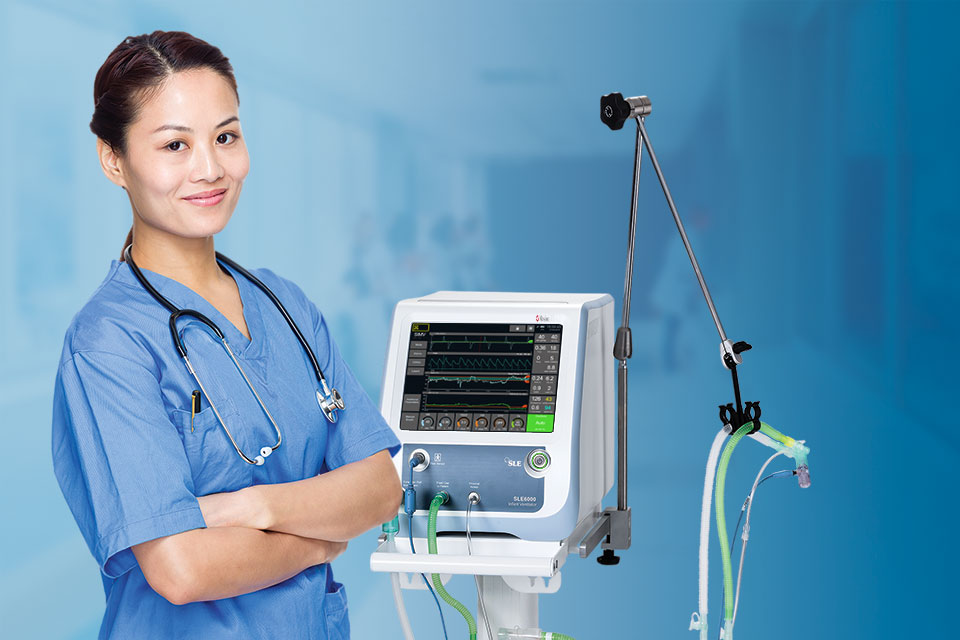
SLE6000 with OxyGenie®
An advanced neonatal ventilator designed to provide a broad and highly specialised range of respiratory support for preterm and term infants, including the smallest and most vulnerable NICU patients. The SLE6000 is positioned as a true all-in-one neonatal ventilation platform, combining conventional invasive ventilation, advanced lung-protective modes, non-invasive respiratory support and High Frequency Oscillatory Ventilation (HFOV) in a single modular system.
As neonatal care standards continue to evolve across the Caribbean, there is increasing interest in technologies that support lung protection, oxygen stability, smoother transition from invasive to non-invasive care, and workflow efficiency in the NICU. The SLE6000 is uniquely suited to support these needs.
Why the SLE6000 stands out
A complete neonatal ventilation platform
The SLE6000 offers a wide spectrum of neonatal respiratory support in one system. This allows clinicians to manage the infant across different stages of respiratory support while maintaining continuity on the same platform.
Advanced HFOV with distinctive SLE technology
One of the most important differentiators of the SLE6000 is its High Frequency Oscillatory Ventilation capability.
The system uses SLE’s unique valveless, bidirectional jet technology, designed to deliver effective and controllable HFOV. This is highly relevant for clinicians seeking a lung-protective oscillatory strategy in fragile neonatal lungs.
Bench data comparing available oscillators has shown that the SLE platform delivered square-wave pressure characteristics and strong oscillatory performance, with delivered tidal volume performance comparable to established reference oscillators and strong transmissive power characteristics. Additional comparative bench work also showed that the SLE platform was among the strongest performers for delivered tidal volume at higher frequencies.
For teams looking for serious neonatal HFOV capability, this is a major point of differentiation.
SLE 6000 Ventilator - Documentation & Videos
A Library of Videos from the manufacturer:
SLE 6000 Education Resources Videos
English Documentation
SLE6000 Brochure
SLE6000 User Manual
SLE6000 Technical Specs
SLE Version 2 Software
SpanishDocumentation
Catálogo del SLE6000
Manual de Usuario SLE6000
Non-invasive support
nCPAP
NIPPV
Triggered NIPPV
DuoPAP
High Flow Oxygen Therapy (HFOT)
nHFOV / non-invasive HFOV capability depending on configuration
Conventional invasive modes
CPAP
CMV
SIMV
PTV
PSV
Key HFOV strengths include:
Active bidirectional oscillatory delivery
Effective control of oxygenation and ventilation
Broad frequency range for clinical flexibility
HFOV with integrated VTV capability
Ability to use HFOV invasively and, in configured systems, non-invasively
Advanced invasive support
HFOV
VTV
(Volume Targeted Ventilation)
Volume Targeted Ventilation for more controlled lung-protective care
The SLE6000 also supports Volume Targeted Ventilation (VTV) across conventional invasive modes, and HFOV includes VTV functionality as standard in the respective module configuration.
This is clinically important because VTV aims to stabilise delivered tidal volume and reduce both volutrauma and atelectrauma associated with variable or excessive ventilation.
In a large observational analysis using the SLE platform, VTV demonstrated:
Accurate and reliable delivery of the clinician-set tidal volume
Good compensation for moderate endotracheal tube leak
More stable PaCO₂ when compared with ventilation without VTV
This reinforces the SLE6000’s positioning as a platform designed for precision ventilation, not just mode availability.
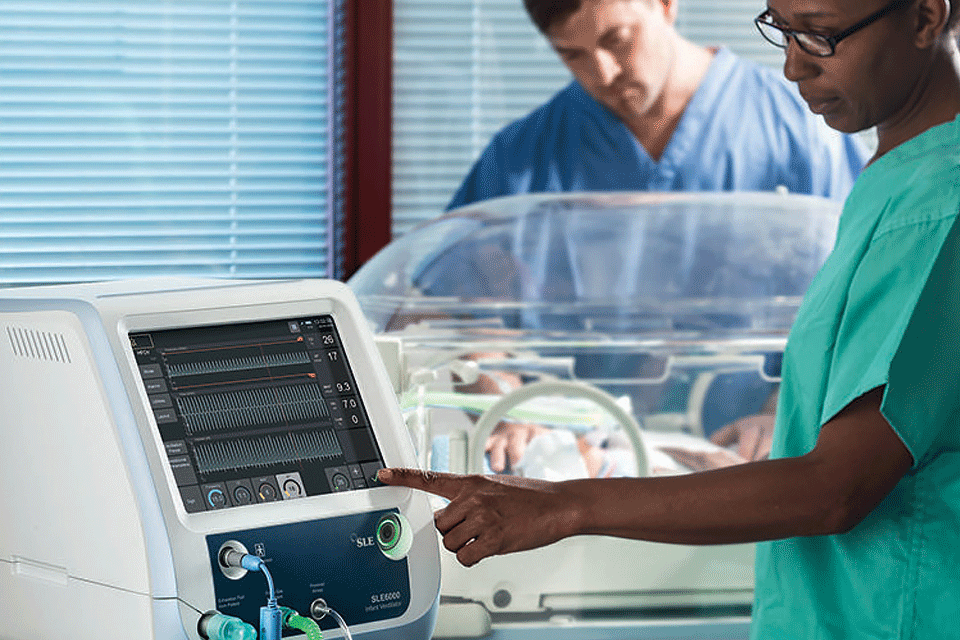
OxyGenie® automatic FiO₂ control
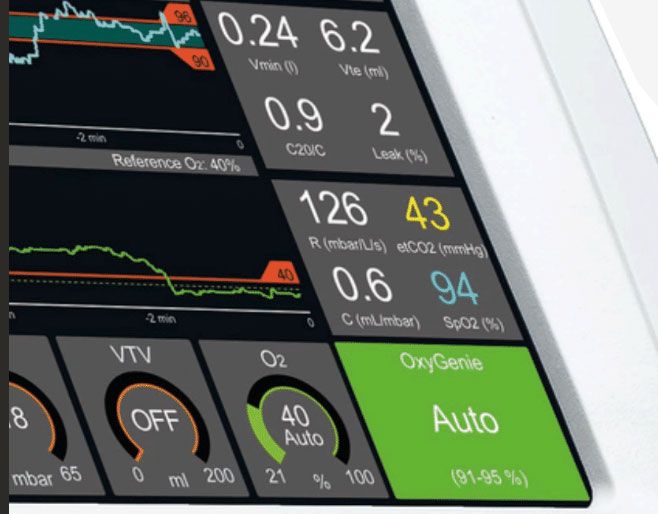
A second major differentiator is OxyGenie®, the integrated automatic oxygen control system available on the SLE6000.
OxyGenie continuously adjusts FiO₂ based on continuous SpO₂ input using a PID-based closed-loop algorithm, helping maintain saturation within the intended target range while reducing manual intervention.
This matters because in ventilated preterm infants:
- SpO₂ fluctuates continuously
- Manual FiO₂ adjustment is intermittent
- Delayed correction may contribute to hypoxaemia, hyperoxaemia and greater instability
Clinical evidence supporting automated oxygen control on the SLE platform has shown:
- 87.5% vs 59.3% time within target range
- Less time in hypoxaemia
- Less time in hyperoxaemia
- Greater oxygenation stability
In a randomized controlled trial in preterm ventilated infants, closed-loop oxygen control was also associated with:
- 11 vs 40 days of mechanical ventilation
- 33 vs 47 days of supplemental oxygen
- 55% vs 83.9% BPD at 36 weeks
- Lower need for home oxygen
This is a highly relevant message for neonatal teams focused on both oxygen precision and longer-term respiratory outcomes.
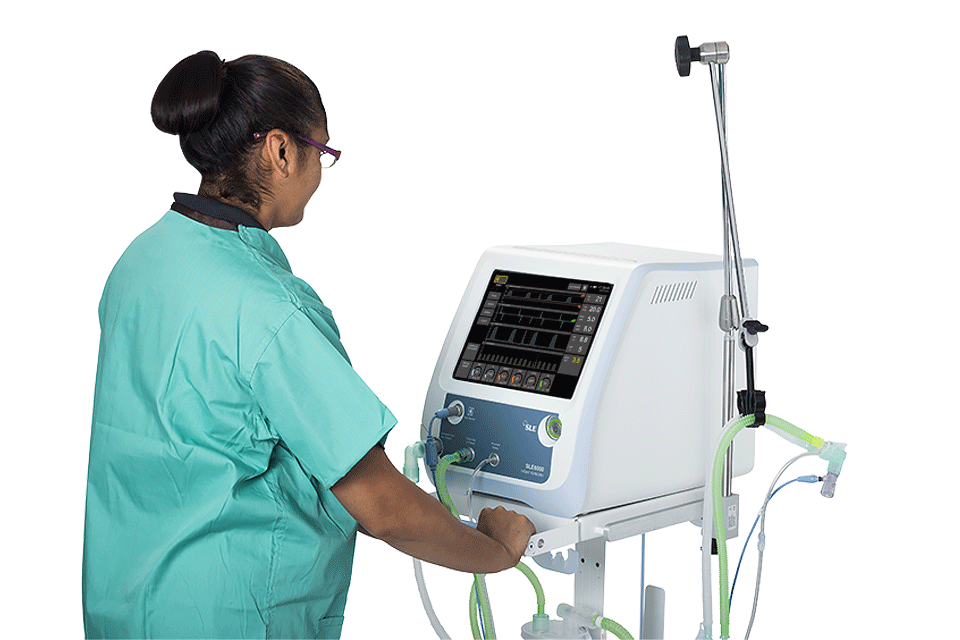
Strong non-invasive respiratory support strategy
The SLE6000 is not only an invasive ventilator. It is also a highly relevant platform for neonatal non-invasive ventilation strategy.
Its non-invasive offering includes:
- nCPAP
- NIPPV
- Triggered NIPPV
- DuoPAP
- HFOT
- nHFOV capability in configured systems
This is particularly important for units aiming to optimise post-extubation support and reduce reintubation.
Triggered NIPPV
The SLE6000 offers Triggered NIPPV, allowing patient-triggered mechanical inflations in non-invasive support. This is a valuable differentiator because better synchrony may help reduce work of breathing and improve patient-ventilator interaction.
DuoPAP
The system also includes DuoPAP for single-limb NIV configurations, offering another non-invasive option for neonatal respiratory support.
nHFOV / non-invasive HFOV
The ability to provide non-invasive HFOV is especially compelling. Clinical data comparing NHFOV with NCPAP after extubation in preterm infants showed:
- Lower reintubation rate
- Lower PCO₂ levels
- Stronger benefit in infants ≤32 weeks
- Additional benefit in infants with neonatal ARDS
This supports a strong positioning message for centres seeking more advanced post-extubation and rescue non-invasive strategies.
Modular system aligned to NICU workflow
Another important advantage of the SLE6000 is its modularity and workflow design. The system can be configured according to clinical and institutional needs with modules such as:
- SpO₂ monitoring
- EtCO₂ monitoring
- OxyGenie®
- VTV
- HFOV
- NIPPV Triggered
- HFOT
- IntelliBridge connectivity
Operationally, the ventilator is designed around:
- A compact footprint
- Capacitive touchscreen
- Clear parameter visibility
- 1-2-3 step workflow logic
- Trend display and loops
- Integration options for monitoring and information systems
This supports continuity from acute invasive ventilation through non-invasive care and step-down use.
Selected References
Harcourt ER, John J, Dargaville PA, Zannin E, Davis PG, Tingay DG. Pressure and flow waveform characteristics of eight high-frequency oscillators. Pediatr Crit Care Med. 2014.
Grazioli S, Karam O, Rimensberger PC. New generation neonatal high frequency ventilators: effect of oscillatory frequency and working principles on performance. Respir Care. 2015;60(3):363-370.
Farrell O, Perkins EJ, Black D, et al. Volume guaranteed? Accuracy of a volume-targeted ventilation mode in infants. Arch Dis Child Fetal Neonatal Ed. 2017.
Kaltsogianni O, Dassios T, Jenkinson A, et al. Closed-loop automated oxygen control in preterm ventilated infants: a randomised controlled trial. Arch Dis Child Fetal Neonatal Ed. 2025.
Chen L, Wang L, Ma J, Feng Z, Li J, Shi Y. Nasal high-frequency oscillatory ventilation in preterm infants with respiratory distress syndrome and ARDS after extubation: a randomized controlled trial. Chest.2019;155(4):740-748.
